

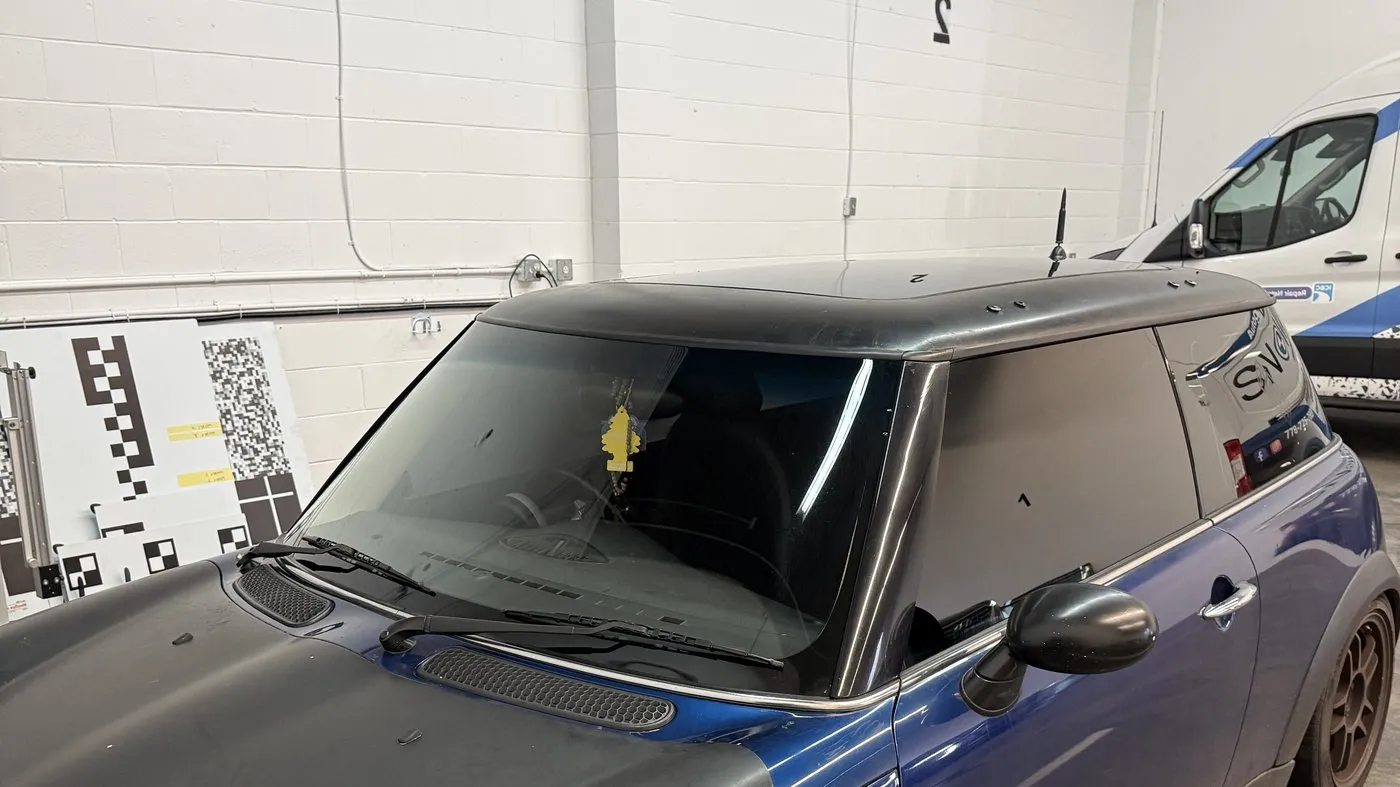
Not all tint is the same material
Walk into a budget shop and you’ll often get dyed film. It’s inexpensive, easy to work with, and within a few years it fades to a reddish-purple tint that looks terrible and does very little. The colour shift happens because the dye that gives the film its darkness breaks down under UV exposure, which is exactly the condition it was supposed to protect against.
Ceramic and carbon films work differently. Carbon film gets its tint from carbon particles suspended in the film layers, which makes it stable, non-fading, and a reasonable heat rejector. Ceramic film is the current benchmark: it uses nano-ceramic particles that block infrared heat and UV without any dye at all. The film stays the same colour it was on day one, ten years later.
We only carry ceramic and carbon options. If you’re spending money on a quality install, the film should be worth installing.
What tint actually does for you
The most immediate benefit most people notice is heat. On a sunny afternoon in July, the inside of a dark-coloured car in a Langley parking lot can exceed 60°C. Ceramic film blocks a significant percentage of the solar infrared energy that causes that heat build-up. Your car is cooler when you get back in, and your air conditioning works less hard once you’re driving.
UV protection is the less dramatic benefit, but arguably the more important one for daily use. Quality film blocks up to 99% of UV-A and UV-B radiation. That matters for your skin on long commutes, and it matters for your interior: your dashboard, leather seats, and upholstery all age faster with direct UV exposure. A vehicle with well-maintained tint on the rear and side windows will show noticeably less interior fading over time.
Privacy and glare reduction are secondary benefits that most customers appreciate once they have them. The glare reduction in particular is something people notice on their first drive home after the installation.
BC tint law and what we install where
British Columbia’s Motor Vehicle Act sets the VLT floor for front side windows at 70%. That’s the amount of visible light that has to pass through. At 70% VLT, the tint is quite light. It provides some UV protection and a very modest reduction in glare and heat, but it won’t look dramatically darker from the outside. That’s the law for front windows, and we follow it.
Rear side windows and the rear windshield have no VLT restriction under BC law. Most customers go significantly darker on those; 35% or 20% VLT is common on rear windows. Combined with unrestricted rear glass, even a moderate front tint gives the vehicle a much cooler interior and better privacy for rear passengers.
We’ll walk you through the options during your consultation. We won’t talk you into the darkest film available if your usage doesn’t call for it, and we won’t install something that puts you offside with ICBC or BC enforcement.
The installation process
Window tinting is a shop-only service. The work needs a clean, dust-controlled environment. Any contamination between the film and the glass during installation shows up as a bubble or speck that’s there permanently. Mobile installation in a driveway sounds convenient, but the results reflect the environment.
The process starts with a thorough clean of the interior glass surface. We cut the film to your specific window patterns, apply it to the inside of the glass using a slip solution, squeegee out moisture and air from edge to edge, and trim the final fit. Each window takes careful, unhurried work. Total time is typically 2–4 hours for a full vehicle, depending on the number of windows and complexity of the rear windshield.
When you pick up the vehicle, the film will look slightly hazy. That’s normal; there’s residual moisture curing out from behind the film. It clears over the following few days as the adhesive finishes curing. During that time, leave your windows up and avoid cleaning the interior glass. After 2–3 days, everything has settled and you can clean the interior glass with a soft cloth and an ammonia-free product.