

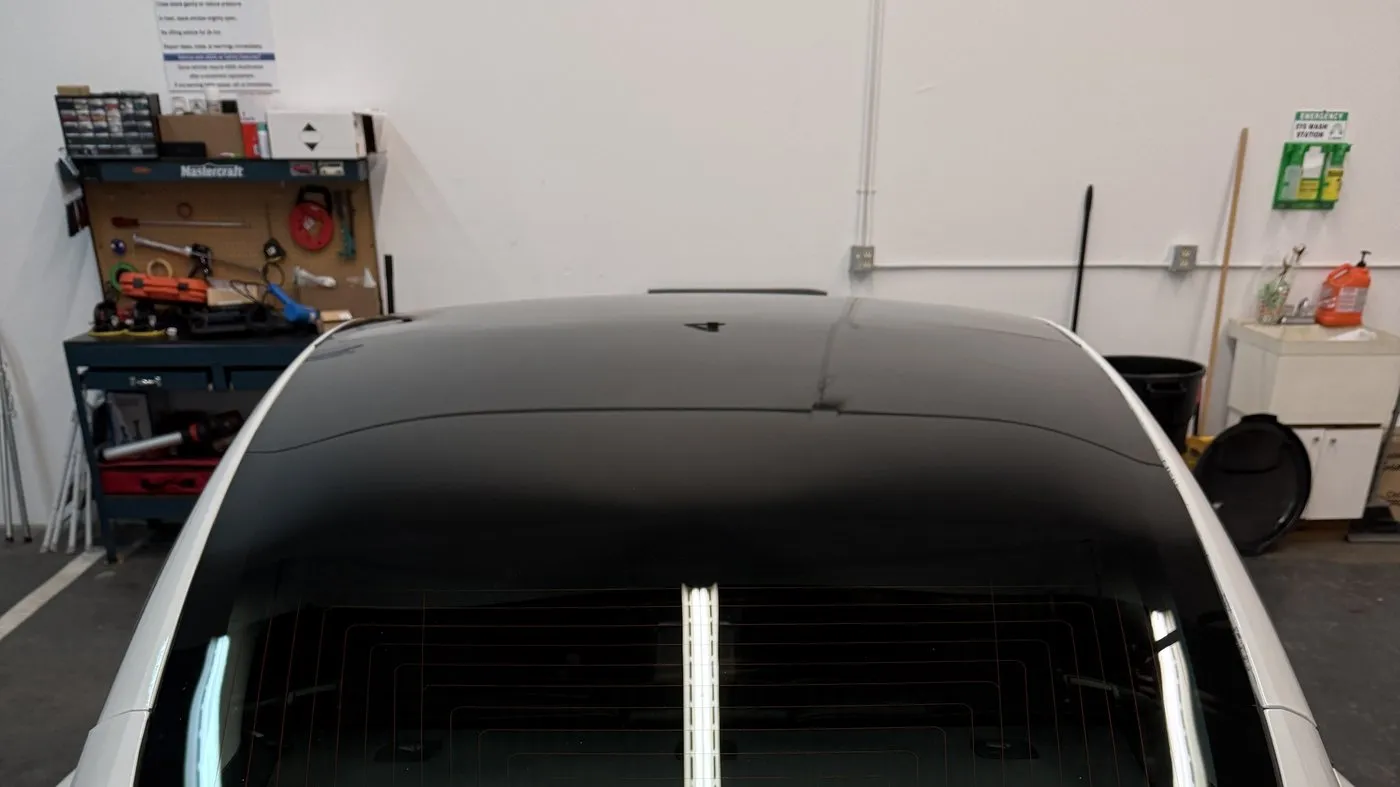

What we replace
We specialise in fixed panoramic roof glass — the large laminated panels found on modern vehicles from Tesla, BMW, Mercedes-Benz, Volvo, Hyundai, Kia, and many others. These panels typically span from above the front seats to the rear of the roofline, and are bonded to the vehicle using urethane adhesive, the same system used on windshields.
We do not service opening sunroofs or moonroofs. Those involve mechanical tracks, motors, and seals that are outside our scope. If you have a fixed panoramic panel that’s cracked, shattered, or leaking, that’s the job we handle.
Why panoramic roof glass is a complex job
Panoramic glass is laminated rather than tempered. Like a windshield, it has a plastic interlayer that holds the panel together when struck rather than shattering into small pieces. This means cracks can spread across the panel and may not be immediately obvious, but the panel still needs replacement — a cracked laminated roof panel will leak and eventually delaminate.
The installation uses urethane adhesive with the same cure-time requirements as a windshield. The panel is large and heavy, requiring careful overhead handling to achieve a clean, even adhesive line. Any contamination in the pinch weld channel or uneven pressure during placement creates a leak point.
Vehicles like the Tesla Model 3, BMW 3 Series, Volvo XC60, and most modern crossovers and SUVs have come standard with fixed panoramic glass roofs. It’s a job we see regularly, and the vehicle-specific differences in glass part, adhesive bead pattern, and sensor configuration are things we confirm before the appointment, not after we’ve started the job.
Why roof glass is in-shop only
We don’t offer mobile service for panoramic roof glass replacement. The reasons are practical.
The panels are large and heavy. Positioning one overhead with consistent, even pressure while applying urethane adhesive requires a level surface and controlled conditions. Wind, an uneven parking lot, or limited overhead access makes that significantly harder and creates real risk of leaks or adhesive failure before the urethane cures.
The pinch weld needs to be thoroughly cleaned and prepared before the new glass goes in. That’s easier with proper lighting, the right tools, and no time pressure from an outdoor setting.
Sensors and recalibration
Some vehicles have rain sensors or ambient light sensors integrated into the roofline near the panoramic glass. On most models, these sit in a bracket that’s removed with the old panel and reinstalled with the new one — no recalibration needed.
A smaller number of vehicles, particularly from BMW and Mercedes-Benz, have more integrated roof electronics that benefit from a diagnostic check after the glass is replaced. We confirm what your specific vehicle requires at booking.
Newer vehicles with overhead interior cameras or driver monitoring systems are worth flagging at booking too. It’s uncommon for roof glass replacement to affect these, but worth confirming for your specific model before the appointment.
ICBC and the claims process
ICBC Comprehensive coverage applies to panoramic roof glass when the damage is from a covered event: a rock strike, hail, or falling debris. We’re an ICBC Repair Network shop, so the process is the same as a windshield claim. You provide your policy details, we do the coverage check, get authorization, order the correct glass, complete the installation, and bill ICBC directly. Standard deductibles apply. Glass claims under Comprehensive don’t affect your claims-rated scale.
If you’re paying out of pocket, we’ll provide a written quote before anything is ordered. Panoramic glass pricing varies considerably by vehicle, so a specific quote for your year, make, and model is the right starting point.