

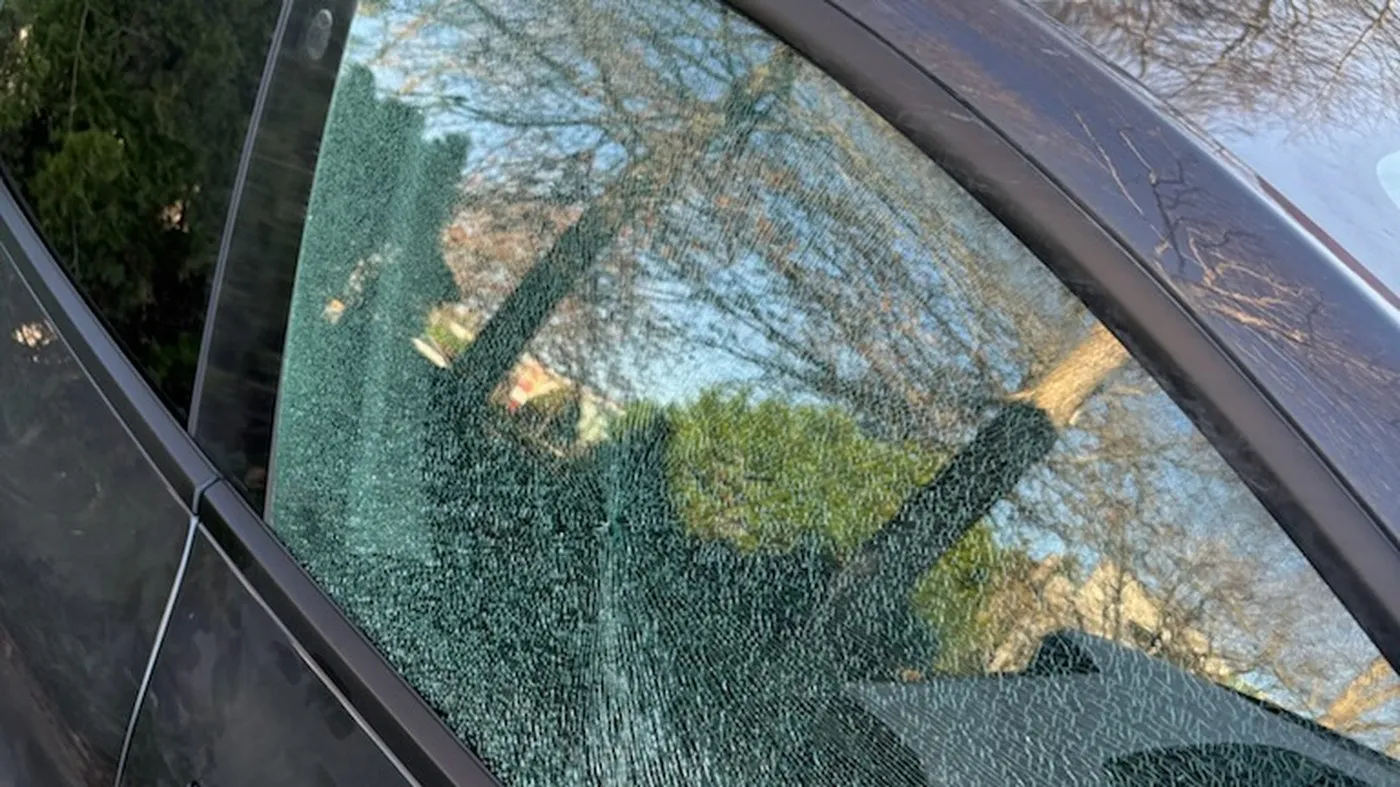

Tempered glass: why it shatters the way it does
If you’ve seen a car side window break, you know what tempered glass looks like when it goes. The whole panel seems to collapse at once into a pile of small, roughly square-edged pieces, nothing like the jagged shards you’d expect from breaking a house window.
That behaviour is engineered, not accidental. Tempered glass is heat-treated to put its surfaces under high compressive stress. That makes it significantly stronger than ordinary glass under normal loads. But when the stress threshold is exceeded, by a hard impact, a break-in attempt, or sometimes even a sudden temperature shift on glass that’s already compromised, the stored energy releases all at once. The whole panel goes simultaneously.
The small, blunt fragments are a safety feature. A driver-side window shattering into rounded pebbles is a much better outcome than one that produces large, sharp-edged shards near an occupant’s face. The trade-off is that there’s no such thing as repairing a tempered side window. Once it’s gone, you replace the whole panel.
This is different from your windshield, which is laminated glass: two glass layers bonded around a plastic interlayer. Laminated glass holds together when broken, which is why a cracked windshield stays in one piece rather than falling in on you.
Break-in damage: what to do first
A shattered window from a break-in is disorienting. Here’s a practical order of events.
First, don’t reach into the door to pick up items before the glass is cleared. The edges of the door opening and any glass remaining in the frame can be sharp. Second, if the vehicle is exposed outside, get something over the opening (a sheet of plastic, a garbage bag secured with tape, anything that keeps the interior dry) until we can get to you. Rain in a door cavity is a problem. Third, call us.
We can often get to you the same day. Door glass replacement is mobile-friendly: there’s no adhesive, no cure time, no weather restriction. We come to where the vehicle is (your home, your workplace, wherever it’s sitting) with the glass for your vehicle, clean out the door cavity thoroughly, and have the window back in place in 60–90 minutes.
If the break-in damaged anything else beyond the glass, we focus on the glass and note what else we observe. Getting the window secured is the priority.
ICBC coverage and break-ins
Break-in damage is covered under ICBC Comprehensive coverage. We file the claim on your behalf; you don’t call ICBC or fill out paperwork before calling us. The claim is a glass claim, which means it doesn’t affect your claims-rated scale. Your premium stays the same.
Standard ICBC deductibles apply to window replacement, the same as any Comprehensive claim. If you have a $300 deductible, for instance, and the glass and labour come to $280, it typically makes more financial sense to pay directly. We’ll talk through the numbers with you before we book, so you can make an informed choice about whether to claim or pay out of pocket.
Private insurers (TAG Network, BCAA Insurance, Family Insurance Solutions) often cover break-in damage as well. We direct-bill those insurers where we can.
Regulator and motor: worth checking while we’re in there
Accessing a door window means accessing the door. Once the trim panel is off and we’re working in the door cavity, checking the window regulator mechanism and motor adds very little time.
Regulators fail more often than drivers realize. The plastic guides and tracks that control the window’s up-and-down path wear out over time, and a window that feels sluggish, makes grinding sounds, or refuses to go back up after being lowered is often a regulator problem rather than a glass problem. Motors fail too, particularly in older vehicles.
If we see anything that looks worn or damaged while we’re in there, we’ll show you and quote the repair separately. It’s your decision whether to address it at the same appointment or leave it for later. We won’t add work without telling you first.