

Should you repair or replace? Here's how to tell.
Not every windshield needs replacing. Waiting too long on a repairable chip will turn a $0 ICBC repair into a several-hundred-dollar replacement. Here's how to read the damage.
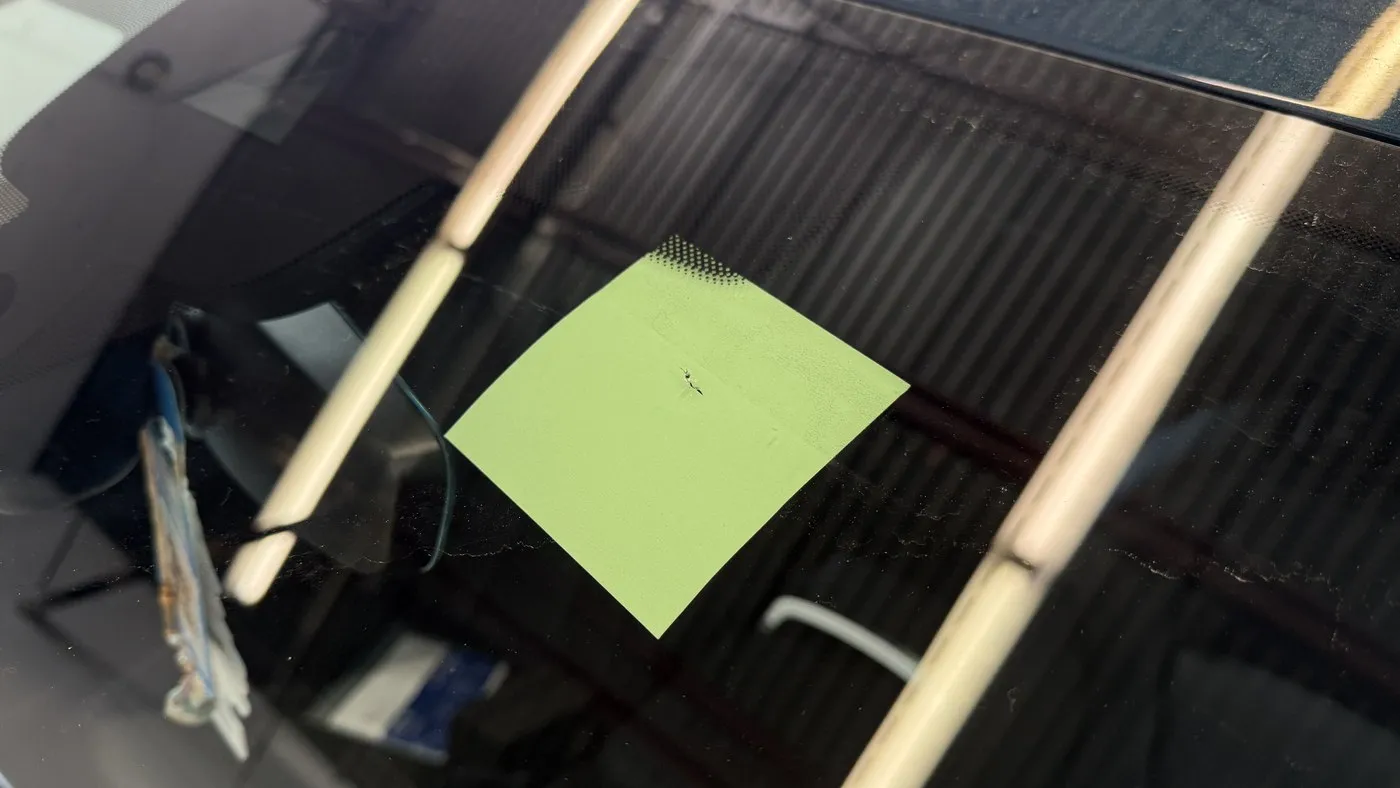
If a rock just hit your windshield, you have somewhere between a few hours and a few weeks before the situation gets worse. The chip you can repair today often turns into a crack you can’t fix tomorrow, usually after a temperature swing, a hard pothole, or just enough vibration to propagate the damage.
The good news is that the rules for “repair or replace” aren’t subjective. There are specific criteria that auto glass technicians use, and most of them you can check yourself with a quick look.
Repair is possible when
A chip or small crack can usually be repaired if all of these are true:
The damage is smaller than a Canadian quarter (about 24 mm across). Most rock chips are far smaller than this: pinpoint stars, small bullseyes, partial circles. Anything you can cover with the tip of your thumb is probably repairable.
The damage is not in the driver’s direct line of sight. ICBC and BC’s Motor Vehicle Act don’t allow repairs to live in the area immediately in front of the steering wheel because the resin used in repair leaves a small visual artifact. A chip in front of the passenger seat, near the rear-view mirror, or down toward the wiper line is usually fine.
The damage is at least 50 mm from the edge of the windshield. Damage near the edge (within roughly two inches) is more likely to spread because that’s where structural stresses concentrate. Edge cracks almost always require replacement.
The damage is a single chip or short crack, not multiple impacts. A windshield with three rock chips can be repaired (one resin fill per chip), but if the chips have started to connect or run cracks between them, replacement is the safer call.
The damage is fresh, ideally less than a few weeks old. Old chips that have collected dirt, road salt, or moisture are harder to repair cleanly because contaminants prevent the resin from bonding to the glass.
Replacement is required when
Any of these conditions usually mean replacement, not repair:
The damage is larger than a quarter or longer than about 6 inches as a crack.
The damage is in the driver’s primary vision area, the area sweeping in front of the steering wheel where it would distract or distort vision after repair.
The damage reaches the edge of the windshield. Edge damage compromises the windshield’s structural bond to the vehicle, and edge cracks tend to grow rapidly under any thermal or mechanical stress.
There are multiple cracks running in different directions from a single impact point. Stress fractures that have already started to spread aren’t candidates for clean repair.
The damage goes through both layers of the windshield (you can see it from inside the cabin as a sharp line, not just on the exterior surface). This is rare from a rock impact but happens, and once both layers are compromised, the glass is structurally finished.
Why fast matters
Repairable damage doesn’t stay repairable forever. Three things turn a chip into a crack:
Temperature swings. A cold windshield meeting hot defrost air, or a hot windshield meeting cold rain, creates expansion and contraction stress that propagates micro-fractures around the chip.
Vibration. Highway driving, potholes, speed bumps: any mechanical shock concentrates stress at the existing damage.
Moisture. Water gets into the chip, freezes, expands, and pushes the crack further. This is why winter is the worst time to delay a repair.
Most chips that we replace as full windshields started as repairable damage that the owner waited on. The repair would have been free with ICBC Comprehensive coverage, completed in 30 minutes. The replacement that resulted ran several hundred dollars and took two hours.
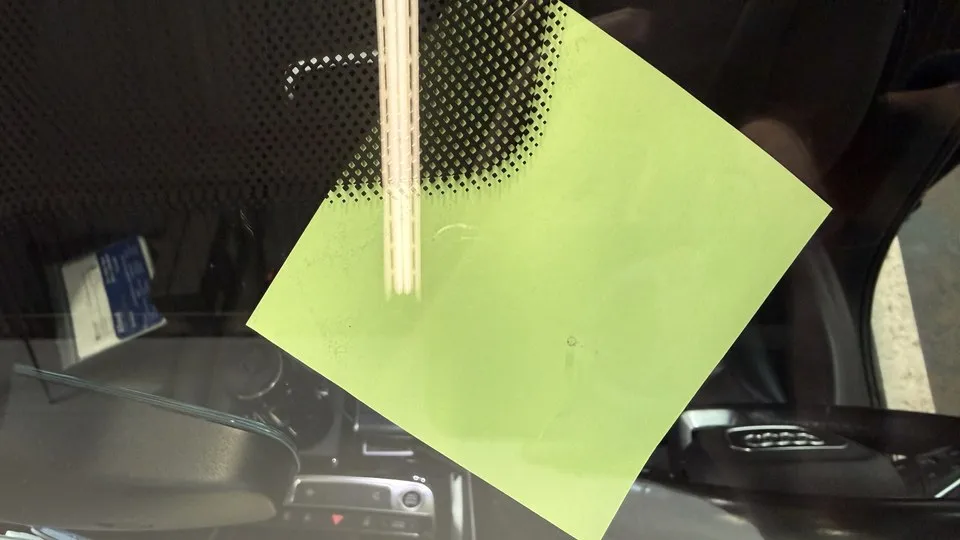
That’s a repaired chip. The same damage that was marked in the photo above. After resin fill and polish, it’s barely noticeable. This is a normal result when the chip is caught early, the glass is clean, and the damage hasn’t started to crack.
How ICBC Comprehensive coverage changes the math
If you carry Comprehensive on your ICBC policy (which most BC drivers do), chip repair is typically covered with no deductible and no impact on your claims-rated scale. There is genuinely no downside to filing the claim and getting the repair done. The “wait and see” instinct that makes sense when you’re paying out of pocket actively works against you when ICBC is paying for the repair.
If you don’t have Comprehensive (basic-only coverage), chip repair runs about $80–$120 out of pocket, still much cheaper than the replacement you’ll need if it spreads.
What to do right now if you have damage
The fastest assessment is a phone photo and a quick call. Take a picture of the damage with something for scale (a coin, a finger), and call your auto glass shop. Most reputable shops can tell you over the phone whether you’re looking at a repair or a replacement, and how soon they can fit you in.
If the damage is in the repairable category, get it done this week, not next month. If it’s already replacement territory, schedule the replacement promptly because driving with significant windshield damage compromises your safety in a collision and is a finable offence under BC’s Motor Vehicle Act.
Either way: don’t drive with damage you’re ignoring. The windshield is a structural component of your vehicle, and waiting for “when it’s convenient” is exactly how a $0 repair becomes a several-hundred-dollar replacement.